
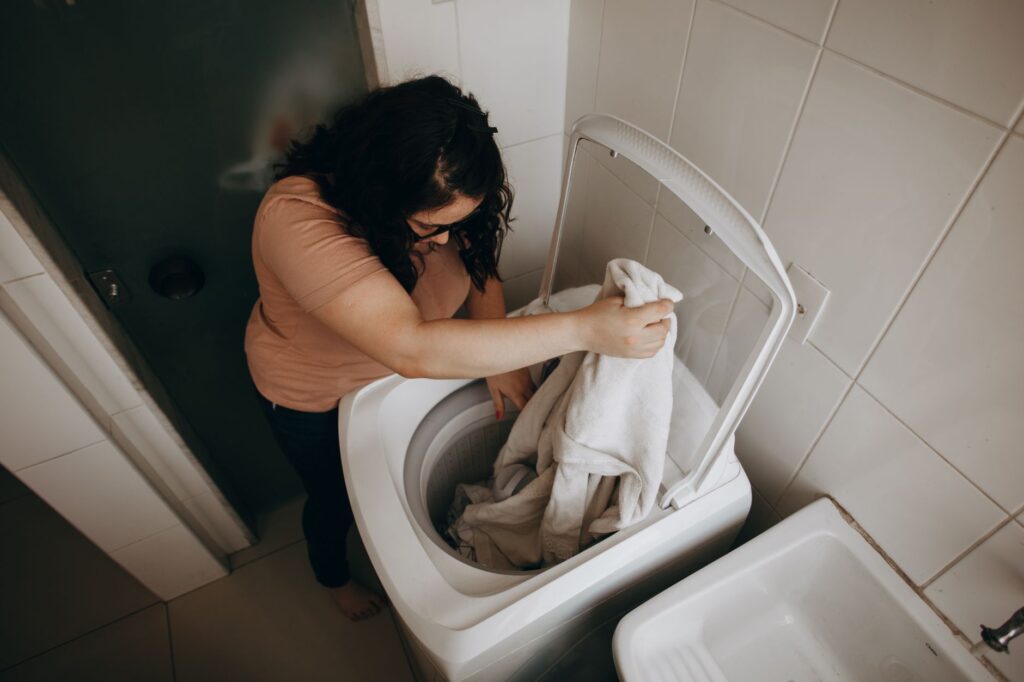
Your laundry is piling up, the drum is sitting full of water, and the display is flashing a code you’ve never seen before. Before you start pricing replacements or calling anyone, spend five minutes with this guide. The Maytag Bravos, Centennial, and MVW top-load line share a tight group of failure patterns, and most of them have a clear fix, some of which you can handle yourself this afternoon.
Maytag Washer Acting Up? Here’s the Likely Culprit
On Maytag top-loaders, three failure modes cause the overwhelming majority of service calls: an unbalanced load the machine can’t self-correct (UL), a lid lock that won’t engage or release (dL/F80), and a no-spin or no-drain situation tied to a clogged pump, worn belt, or failed shift actuator. Knowing which one you’re dealing with takes about two minutes and determines whether you need a screwdriver or a technician.
Start with the basics. Is there standing water in the drum? That points to a drain issue. Did the machine spin fine until recently, then suddenly stop? Check the lid lock first. Is it shaking violently and flashing mid-cycle? That’s the UL correction routine trying, and failing, to rebalance itself. Each of those paths leads to a specific section below.
If you’re in Frisco, McKinney, Prosper, or anywhere else in Collin County and want a same-day diagnosis instead, Clear Services Appliance Repair carries common Maytag parts on every service vehicle so we can skip the “order and wait” routine entirely.
Common Maytag Washer Error Codes Explained (UL, F7E1, Lid Lock)
Maytag top-loaders (MVWB, MVWC, and MVWX series) use a mix of word codes and F-code combinations depending on the model generation. Here are the ones we see most often on service calls across Collin County.
UL (Unbalanced Load)
UL means the machine detected an off-balance load and launched a self-correction routine. The display clears on its own if the mini-cycle successfully rebalanced the load. If it’s still flashing after the routine finishes, the machine is asking you to open the lid and redistribute manually. That’s a genuine DIY fix.
When UL shows up on every load, even normally sorted ones, the problem isn’t laundry habits. Recurring UL typically points to a worn drive block, loose spanner nut, damaged suspension springs, or debris in the tub area that prevents proper basket movement. Those components require disassembly and should be handled by a licensed tech.
dL / F80 (Lid Lock Fault)
dL (and its F-code equivalents F80, F82, F84, F85) means the lid cannot be locked, or the control cannot confirm the lid is locked. The machine won’t start a spin cycle without a confirmed lid lock signal. First check that nothing, a sock, a coin, fabric softener residue, is caught in the strike plate opening. Clean it out and test again.
F7E1 (Motor Speed Sensing)
F7E1 means the control board cannot detect the drum’s rotation speed. The main control board is responsible for managing all of the washer’s functions, and if it’s malfunctioning, it may fail to send the correct signals to the motor. A single occurrence after a very bulky load (sheets that bunched up, for example) can often be cleared with a 5-minute power reset: unplug the machine completely, wait, plug it back in. If F7E1 returns immediately or consistently, you’re looking at a motor, wiring harness, or control board issue. Stop there and call a tech.
Ld / F32 (Long Drain)
Ld means the washer tried to drain but the water level didn’t drop in time. This could be due to a clogged drain hose or pump filter, or even a malfunctioning drain pump. Start with the drain pump filter, which is the most common cause and a safe DIY fix covered in Fix #1 below.
Fix #1: How to Clean the Drain Pump Filter on a Maytag Top-Loader
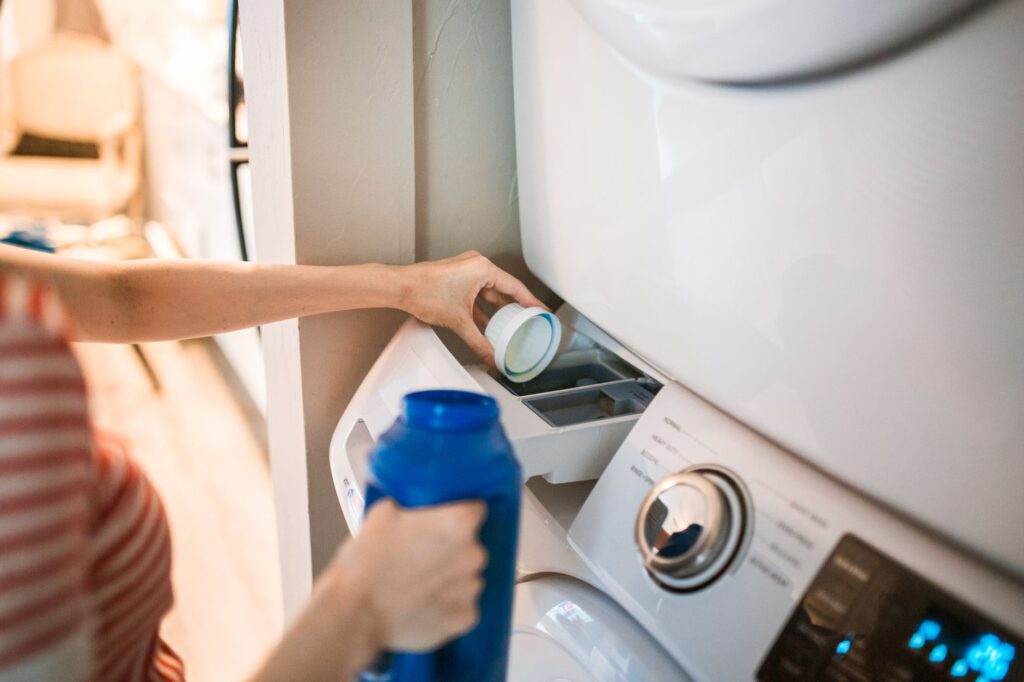
Cleaning the drain pump filter is the single highest-value DIY task you can do on a Maytag top-loader. Small items like coins, socks, or lint can easily block the pump’s impeller and cause both drain failures and no-spin problems. This takes about 15 minutes and requires no special tools.
What You’ll Need
A shallow pan or baking tray, several old towels, a pair of pliers (for stubborn caps), and a flashlight. If the drum is full of standing water, have a wet/dry shop vac ready. Opening the drain pump filter will release all the standing water inside the machine onto your floor if you don’t drain it first.
Step-by-Step
Step 1: Kill the power. Unplug the washer from the wall outlet. Never work on a washer with power connected.
Step 2: Locate the access panel. On Maytag top-load VMW models (Bravos, Centennial, MVW series), the drain pump sits low on the front of the machine, often behind a small kick panel that pops off with a flathead screwdriver or unclips by hand. On some models, you’ll need to tilt the washer backward slightly to access the pump from underneath. If you tilt it, have a second person help stabilize the machine.
Step 3: Position your pan and towels. Slide the shallow pan under the pump area. Lay towels around it. Even after you’ve shop-vacced the drum, residual water will run out when you open the filter.
Step 4: Open the drain hose first (if present). Some models have a small drain hose next to the filter cap. Pull it out, remove its cap, and let the water drain into your pan before opening the main filter. You may need to empty the pan several times.
Step 5: Unscrew the filter cap. Turn the cap counter-clockwise and pull it straight out. Remove all lint, coins, buttons, and debris. Rinse the filter thoroughly, reinsert it, and screw the cap closed firmly.
Step 6: Check the impeller. With the filter removed, shine your flashlight into the pump opening. You should see the impeller (a small plastic fan). Spin it gently with your finger. It should rotate freely. If it grinds, is jammed, or won’t move, there’s debris deeper in the pump or the pump motor has failed. Stop here and call a tech.
Step 7: Reinstall and test. Replace the filter cap, restore the kick panel, plug the washer back in, and run a Drain/Spin cycle with an empty drum. Water should drain cleanly within a few minutes. If the Ld or F32 code returns, move on to checking the drain hose for kinks at the standpipe and confirm the hose isn’t inserted more than 4.5 inches into the standpipe, which can cause a siphoning effect.
When to stop and call: If the drum still has standing water after cleaning the filter and straightening the hose, the drain pump impeller may be jammed or the pump motor has failed, and a professional repair is needed. Forcing additional spin attempts with standing water in the drum puts extra strain on the motor and the control board.
Fix #2: Lid Lock Reset — Step-by-Step
A dL error doesn’t always mean the lid lock assembly is dead. Before replacing anything, try the sequence below. It resolves the fault roughly half the time on service calls we’ve responded to in the Windsong Ranch and Phillips Creek Ranch areas of Frisco.
Basic Reset (Try This First)
Step 1: Press PAUSE/CANCEL once to clear the error code from the display.
Step 2: Unplug the washer and wait a full 60 seconds. This allows the lid lock solenoid to fully de-energize and reset.
Step 3: While it’s unplugged, open and close the lid firmly two or three times. Listen for the click of the strike engaging the lock body. If you hear grinding or feel the lid dragging on something, check for clothing caught in the hinge area or debris in the strike pocket.
Step 4: Plug the washer back in. Select Normal cycle and press Start. Watch the lid lock indicator. You should hear a click within the first few seconds as the lock engages. If it does, the machine should proceed into the fill cycle.
Diagnostic Mode Reset (For Persistent dL on Bravos/MVW Models)
If the basic reset doesn’t clear it, you can enter the diagnostic sequence. Unplug the washer and wait 20 seconds before plugging it back in. Then press the wash temperature button, spin speed button, and soil level button in the sequence 1-2-3, 1-2-3, 1-2-3. If done correctly, all lights will illuminate, confirming you’re in diagnostic mode. From there the machine will run a self-test. Error codes stored in memory will display, which tells you whether the lid lock is actually defective or the fault was a one-time glitch.
When the Reset Doesn’t Hold
If dL returns immediately after reset, check the wires between the lid lock and the control board for any loose or damaged connections, and measure the resistance level of the connection between the control board and the lid lock. A healthy lid lock assembly typically reads within the manufacturer’s specified resistance range on a multimeter. If the reading is open (OL) or far outside spec, the lid lock assembly needs replacement. Part W10404050 fits most Bravos and MVW models produced after 2010, but always cross-reference with your specific model number before ordering. Lid lock replacement is a beginner-to-intermediate DIY repair: it involves removing the top panel, disconnecting one wire harness, and swapping the assembly. If you’re comfortable with that, go for it. If not, it’s one of the faster service calls we handle, typically under an hour.
Fix #3: No-Spin Diagnosis — Belt, Motor Coupling, or Control Board?
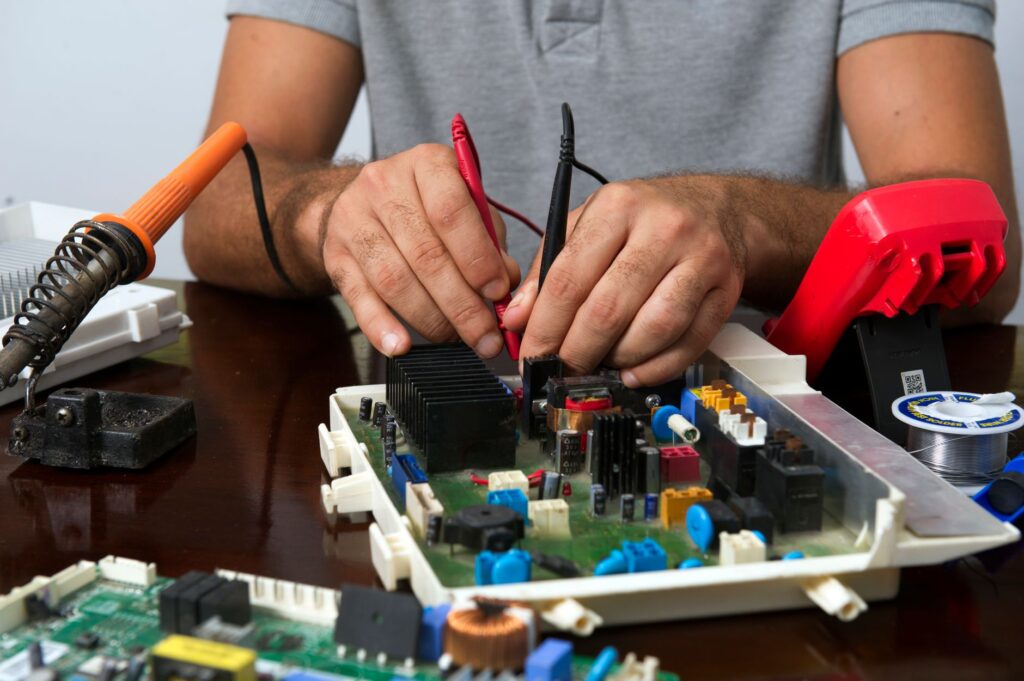
No-spin on a Maytag top-loader has three distinct causes, and they’re not equal in repair cost or complexity. The fastest way to narrow it down is to listen carefully during the spin attempt.
On Maytag Bravos and MVW top-loaders, main causes for no-spin include worn drive belt, bad clutch, broken motor coupler, shifter assembly failure, and broken door lock. Here’s how to tell them apart without opening the machine.
Symptom-Based Diagnosis
Motor hums but basket doesn’t move: The motor is running but the drive system isn’t transferring power. Most likely cause is a worn or broken drive belt or a failed motor coupling. Both are moderate DIY repairs. The drive belt on most Bravos VMW models costs $15–$30 and is accessible by removing the back panel. A worn splutch (drive clutch) can also cause spin or washplate problems and is worth inspecting at the same time you’re in there for a belt.
Machine fills, agitates, but won’t transition to spin: This is a classic shift actuator (mode shifter) problem. The main causes are broken lid switch or lid lock, bad pressure switch, broken shifter assembly, and faulty control system. The shift actuator tells the machine to switch from the wash/agitate mode to the spin mode. When it fails, the basket doesn’t engage. This is a DIY-friendly repair on most Bravos models, roughly $40–$80 in parts, but it does require tilting or laying the machine on its side.
Nothing at all, no sound, no movement: Start with the lid lock (see Fix #2 above). The machine won’t attempt spin if it can’t confirm lid-locked status. If the lid lock checks out, the next suspects are the control board and the motor itself. Both require a multimeter and some experience with wiring diagrams. If the problem may be due to a faulty control board, replacing it without proper troubleshooting could potentially damage the new control board again. Call a tech at this point.
Maytag vs. Whirlpool Washers: Same Parts, Same Fixes?
Mostly yes, and this is genuinely useful to know. Whirlpool and Maytag often share many internal washer components because Maytag is a Whirlpool Corporation brand. On the VMW (Vertical Modular Washer) platform shared by the Bravos, Centennial, and most Whirlpool Cabrio models, error codes, diagnostic sequences, and many replacement parts cross over directly. That’s good news if you live in Collin County: a tech experienced on one brand is essentially experienced on both.
There are real differences worth knowing, though.
| Feature | Maytag (Bravos / MVW) | Whirlpool (Cabrio / WTW) |
|---|---|---|
| Platform | VMW (Vertical Modular Washer) | VMW (Vertical Modular Washer) |
| Error codes | UL, dL, Ld, F7E1, F80–F85 | Ofb/UL, F5E1, Ld, F7E1, F8E1 |
| Drive belt | Shared part numbers on most models | Shared part numbers on most models |
| Lid lock assembly | Often shared; match by model number | Often shared; match by model number |
| Drain pump | W10403802 (common Bravos pump) | W10403802 (same part, many Cabrio models) |
| Shift actuator | W10006355 (common on Bravos XL) | W10006355 (same part, Cabrio) |
| Control board | Model-specific; do not cross-reference blindly | Model-specific; do not cross-reference blindly |
| Drive motor warranty | 10-year limited parts warranty (many models) | 1-year limited warranty standard |
| Diagnostic mode entry | Button sequence: 1-2-3, 1-2-3, 1-2-3 | Same sequence on VMW-platform models |
| Repair tech needed | Any tech familiar with VMW platform | Any tech familiar with VMW platform |
The practical takeaway: Maytag and Whirlpool machines share some parts, so it’s not hard to find technicians who can work on both brands. If you’ve seen a Whirlpool Cabrio repair guide that covers your exact symptom, the steps and parts almost certainly apply to your Bravos or Centennial too. Control boards are the major exception: always verify the part number against your specific model label before ordering.
DIY Decision Guide: What You Can Handle vs. When to Call
Here’s the honest version of the DIY line. Crossing it isn’t about skill, it’s about whether a mistake on this particular task costs you $40 in parts or $400 in a damaged control board.
Safe DIY Repairs
Cleaning the drain pump filter. No electrical exposure, no special tools, easiest maintenance task on the machine. Do this first, every time.
Redistributing an unbalanced load (UL). Open the lid, rearrange clothes, close lid, press Start. If this clears it, done.
Leveling the machine. Recurring UL on every load is often caused by a machine that isn’t level. Adjustable feet are on all four corners. Use a bubble level on top of the machine and thread the feet in or out until all four corners contact the floor solidly. Tighten the locking nuts.
Basic lid lock reset. The button sequence and 60-second unplug routine described in Fix #2 above. Takes under five minutes.
Drive belt replacement. Moderate difficulty. Requires back panel removal and about 45 minutes. The belt is inexpensive ($15–$30) and the task is well-documented with Maytag service videos. If you’re comfortable with basic appliance disassembly, this is within reach.
Call a Licensed Tech
Any error code that returns immediately after a hard reset. A code that clears and stays clear is probably a transient fault. A code that returns immediately after a power-cycle reset should be treated as a real fault. Continuing to run the machine risks cascading damage to other components.
F7E1 that won’t clear. Motor speed sensing faults that persist after a reset point to the motor tachometer, wiring harness, or control board. Diagnosing these correctly requires a multimeter and access to the tech sheet (usually stored in the console under the top panel). A wrong diagnosis here means buying an expensive part you don’t need.
Control board replacement. The board runs $150–$300 in parts depending on the model. Installing the wrong one, or installing the right one with a wiring error, can damage the new board immediately. This is one of the few repairs where DIY goes wrong more often than it goes right on first attempt.
Recurring UL with a good load. If the machine goes out of balance on balanced loads, the internal suspension (springs, dampers, drive block) is failing. Diagnosing which component has worn requires lifting the top panel and visually inspecting under load.
Drum has standing water and filter cleaning didn’t fix it. The pump impeller may be jammed or the pump motor has failed. Forcing the machine to run with standing water stresses the motor and can corrupt the control board.
One more thing worth raising before you call anyone: the 50% rule. If the repair cost is going to exceed 50% of what a comparable new machine costs, and your washer is already 8 or more years old, replacement deserves serious consideration. We’ll tell you that before we quote you a repair, because pushing an aging machine for another 18 months with a $400 repair rarely makes financial sense. Our washer repair service page has more details on how we approach the repair-or-replace conversation.
Same-Day Maytag Washer Repair in Collin County and DFW
Clear Services Appliance Repair handles Maytag Bravos, Centennial, and MVW top-loaders across Frisco, Plano, Allen, McKinney, Prosper, Celina, and throughout the DFW metro. Because we work on Maytag and Whirlpool VMW-platform machines regularly, our techs arrive with the most common drain pumps, lid lock assemblies, shift actuators, and drive belts already on the vehicle. No ordering parts, no second visit in most cases.
Call 469-318-9918 before noon Monday through Saturday and we’ll get a technician to you the same day. Text us a photo of your model plate (inside the lid frame on most Maytag top-loaders) so we can pull the right part before we leave the warehouse. Our $65 diagnostic fee is waived when you proceed with the repair, and every repair carries a 90-day parts and labor warranty. If the same issue returns within 90 days, we come back at no charge.
Frequently Asked Questions
What does the UL error code mean on a Maytag Bravos or Centennial washer?
UL means the washer detected an unbalanced load and launched a self-correction routine. If the routine succeeds, the code clears on its own. If it keeps flashing, open the lid, redistribute the load evenly, close the lid, and press Start. If UL appears on balanced loads regularly, a mechanical issue (worn suspension, drive block, or loose spanner nut) is likely the cause and a technician should inspect it.
Why is my Maytag washer not spinning even though the motor sounds like it’s running?
If the motor hums but the basket won’t spin, the most common cause is a worn or broken drive belt or a failed shift actuator (mode shifter). The shift actuator tells the machine to transition from wash mode to spin mode. If it fails, the basket never engages. Check the lid lock first since the machine won’t spin without a confirmed lid-lock signal, then inspect the belt and actuator.
How do I reset the lid lock on a Maytag Bravos XL?
Press PAUSE/CANCEL once to clear the fault, then unplug the washer for at least 60 seconds. Open and close the lid firmly a few times to ensure nothing is obstructing the strike plate. Plug the machine back in and start a Normal cycle. If dL returns immediately, enter diagnostic mode using the 1-2-3, 1-2-3, 1-2-3 button sequence (wash temp, spin speed, soil level) after plugging in without pressing power. Persistent dL points to a failed lid lock assembly or damaged wiring harness.
Can Maytag Bravos parts be used on a Whirlpool Cabrio, and vice versa?
Often yes. Both the Maytag Bravos and Whirlpool Cabrio run on the same VMW (Vertical Modular Washer) platform, and many parts such as drain pumps, drive belts, shift actuators, and lid lock assemblies share part numbers. Control boards are the main exception: always verify the exact part number against your specific model label before ordering, since boards are model-specific and installing the wrong one can damage the board immediately.
How often should I clean the drain pump filter on my Maytag top-load washer?
Clean the drain pump filter every three to six months under normal use, or immediately any time your washer shows an Ld or F32 drain error, leaves standing water in the drum, or takes noticeably longer to drain than usual. In North Texas homes with hard water, lint and mineral debris can accumulate faster than average, so erring toward a quarterly cleaning schedule is a good habit.
